 NearLife
You get home from work and open a food delivery app. You are not sure what you want, but you keep scrolling. On an evening like this, what if you made a little room for how you feel alongside what to eat?
A familiar solo dinner can feel different every day
Dinner alone may look much the same from one day to the next, yet the experience can change. Some evenings call for quiet. On others, you might want a familiar voice playing in the background. The same rice bowl can feel unhurried one night and barely register the next, when work is still on your mind.
A foodservice industry analysis published by South Korea’s Ministry of Agriculture, Food and Rural Affairs highlights the growth of individualized meals and demand for dining alone. As meals shaped around personal preferences receive attention, we would like to add one small question: alongside what you want to eat, how do you feel as you sit down to it?
Three questions before you choose dinner
First, how hungry do you feel? You might be very hungry, a little peckish, or unsure. Use your own words. There is no required number or correct answer.
Second, what is your mood right now? Tired, relieved, or bored might be close enough. You do not have to decide whether hunger or emotion is the “real” feeling. Both can be present.
Third, how much time and energy do you have for dinner? Consider whether you feel up to cooking or would prefer something ready to eat. Your appetite, budget, and available time can help you put today’s choice into words.
A small starting point when nothing comes to mind
If a warm bowl sounds appealing, think of a soup or rice bowl you already enjoy. A familiar one-bowl meal might suit an evening when you want less washing up. If you feel like cooking, start by looking at what you have at home.
There is no need to expect a particular food to change your emotions. This is an invitation to notice what appeals to you, what you can prepare, and how the meal feels afterward. Choosing the same dinner again is fine, too.
A food and mood journal can be this brief
The entry below is a fictional example to show one way to write a meal journal. It is not a real user’s experience or testimonial.
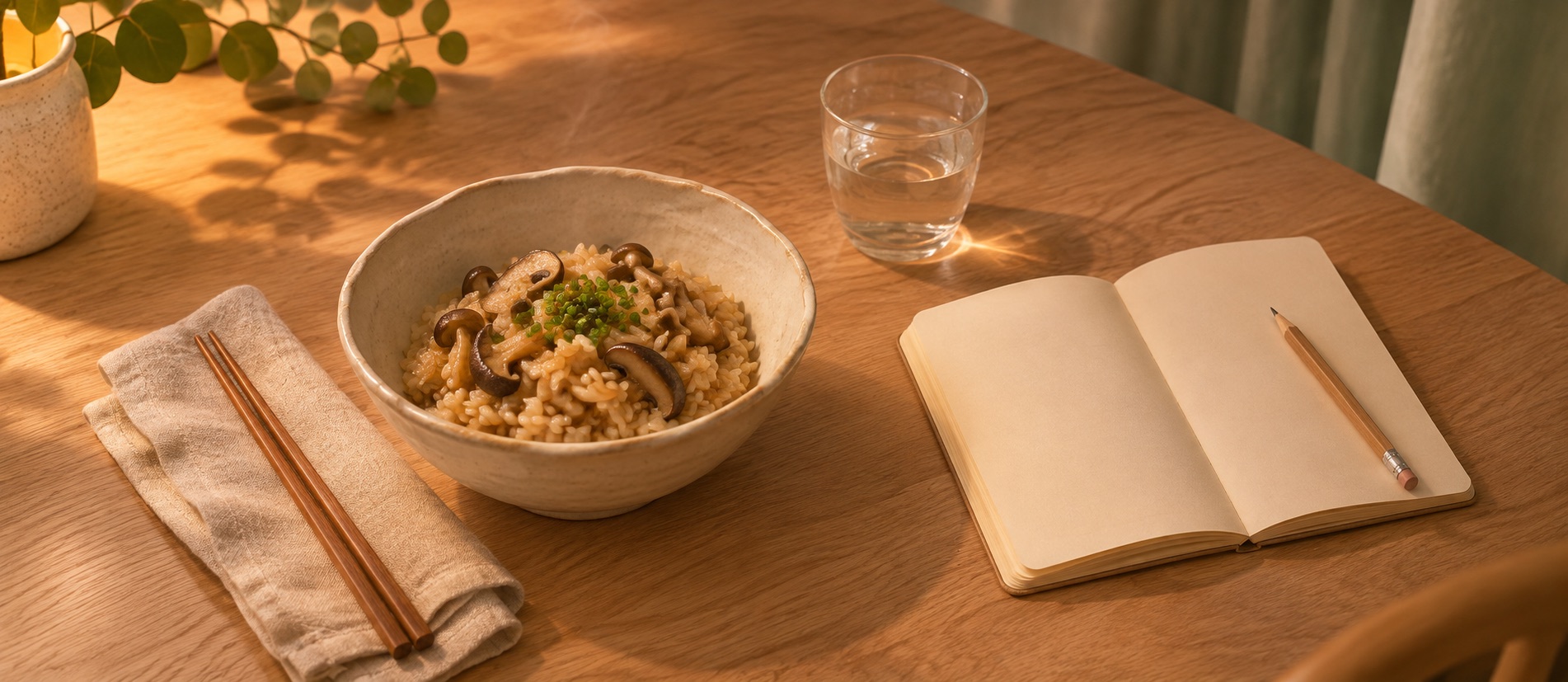
“Wednesday evening, mushroom rice bowl. I felt hungry and a little worn out before eating. I started quickly, then slowed down halfway through. After dinner, I wanted some quiet time.”
A food name alone tells you that you had a mushroom rice bowl. Adding your mood and eating pace preserves a little of how you spent the evening. If you did not take a photo or do not feel like writing sentences, “tired · ate quickly” can be enough to begin.
Look back at a moment, without needing an answer
Once you have a few entries, try looking at two similar dinners side by side. Were you in the same place? Did you feel especially rushed? What did you note about your mood afterward? If the meals felt different, you can simply write down that difference.
A few entries do not establish that a particular food changed your mood. Consider what else was happening, such as the time of the meal or your schedule that day. “I’m not sure yet” is something you can record, too.
One sentence to keep from tonight’s dinner
“How did I feel while eating dinner tonight?” Try keeping just this question after your next meal alone. You do not have to write every day or save only the meals that went well.
MealVibe lets you note your mood, hunger, eating pace, and portion size, with photos or notes if you wish. A brief entry today can become a small moment of your life to return to later.